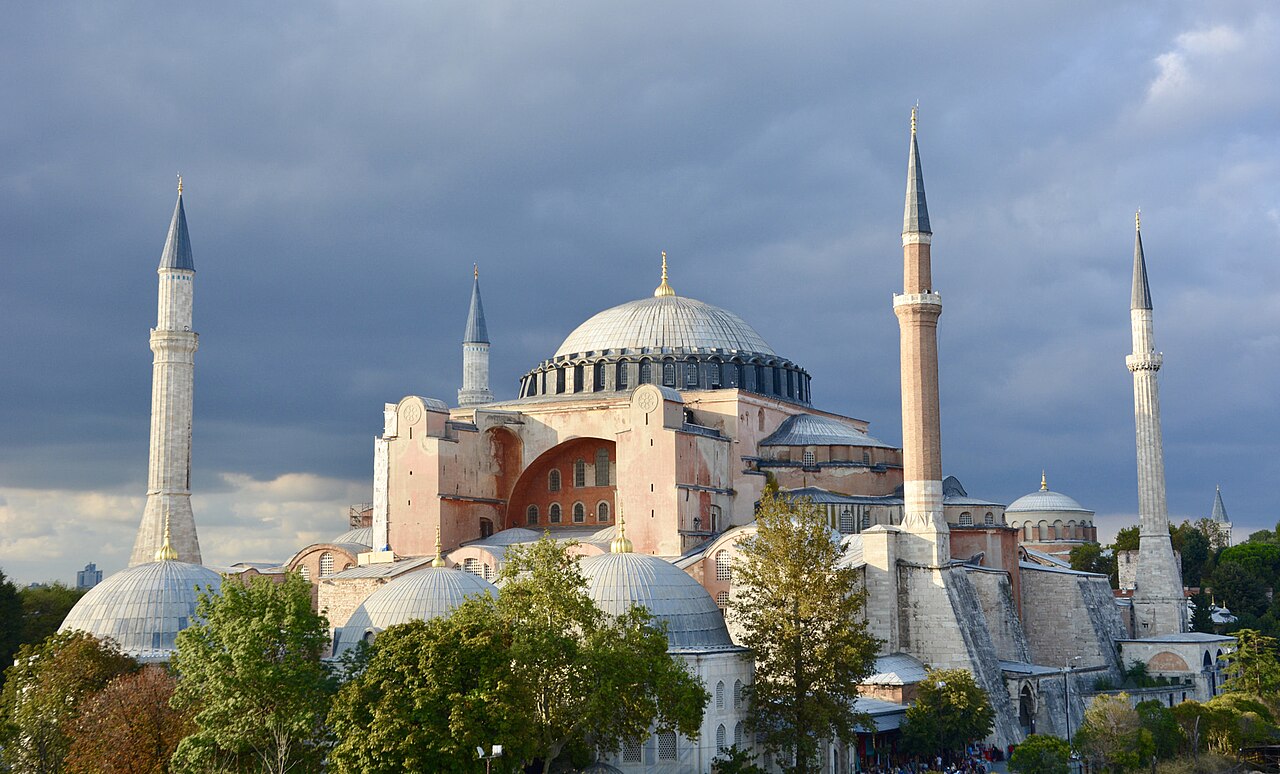
Overview
The Hagia Sophia Grand Mosque, located at the coordinates 41.00856678, 28.98016083, is a significant historical and architectural landmark in Turkey. Originally constructed as a cathedral in the 6th century during the reign of Emperor Justinian I, it has served various religious purposes over the centuries, including as a mosque and, more recently, as a museum before being reconverted into a mosque in 2020. This site exemplifies Byzantine architecture and is renowned for its massive dome, stunning mosaics, and intricate marble pillars, reflecting the rich cultural tapestry of the region.
Why Visit
- The impressive dome, which spans 31 meters in diameter and appears to float above the nave, showcases advanced engineering techniques of its time.
- Visitors can observe exquisite mosaics depicting biblical scenes, many of which date back to the 9th century, offering a glimpse into the artistic heritage of the Byzantine Empire.
- The building's mix of architectural styles, including elements of both Byzantine and Islamic design, makes it a unique example of cultural synthesis.
- The extensive use of light, with windows strategically placed around the dome, creates a mesmerizing atmosphere within the interior space.
- The grand scale of the mosque, with its soaring ceilings and vast nave, evokes a sense of awe and reverence among visitors.
Visitor Experience
Visitors to the Hagia Sophia Grand Mosque can expect to engage with a site that is both a spiritual hub and a historical treasure. Upon entering, guests are greeted by the vast open space and the interplay of light and shadow created by the numerous windows. The rich historical narrative is palpable as visitors walk across the marble floors, surrounded by towering columns and intricate designs. Audio guides and informational displays are available to enhance understanding of the site's complex history, making it accessible to a diverse audience. As an active place of worship, guests are encouraged to respect the mosque's sacred environment, which includes observing designated prayer times.
Travel Tips
When planning a visit to the Hagia Sophia Grand Mosque, it's advisable to dress modestly, as it is an active place of worship. Women should consider wearing a headscarf, and all visitors should ensure that their shoulders and knees are covered. Visiting early in the morning or later in the afternoon can help avoid larger crowds, allowing for a more contemplative experience. Be aware of prayer times, as they may affect access to certain areas of the mosque. Additionally, photography is allowed, but visitors should be mindful of others and avoid using flash in any areas deemed sensitive.
Nearby Places
The Hagia Sophia Grand Mosque is situated within close proximity to several other notable landmarks in Turkey. The Blue Mosque, with its iconic six minarets and beautiful tilework, lies just a short walk away, making it a popular companion site for visitors. The Topkapi Palace, the former residence of Ottoman sultans, is also nearby, offering insights into the opulent lifestyle of the Ottoman Empire. These sites, along with the bustling Grand Bazaar and the serene landscapes of Sultanahmet Square, provide a rich cultural experience for those exploring the area.
See also
Places around this location