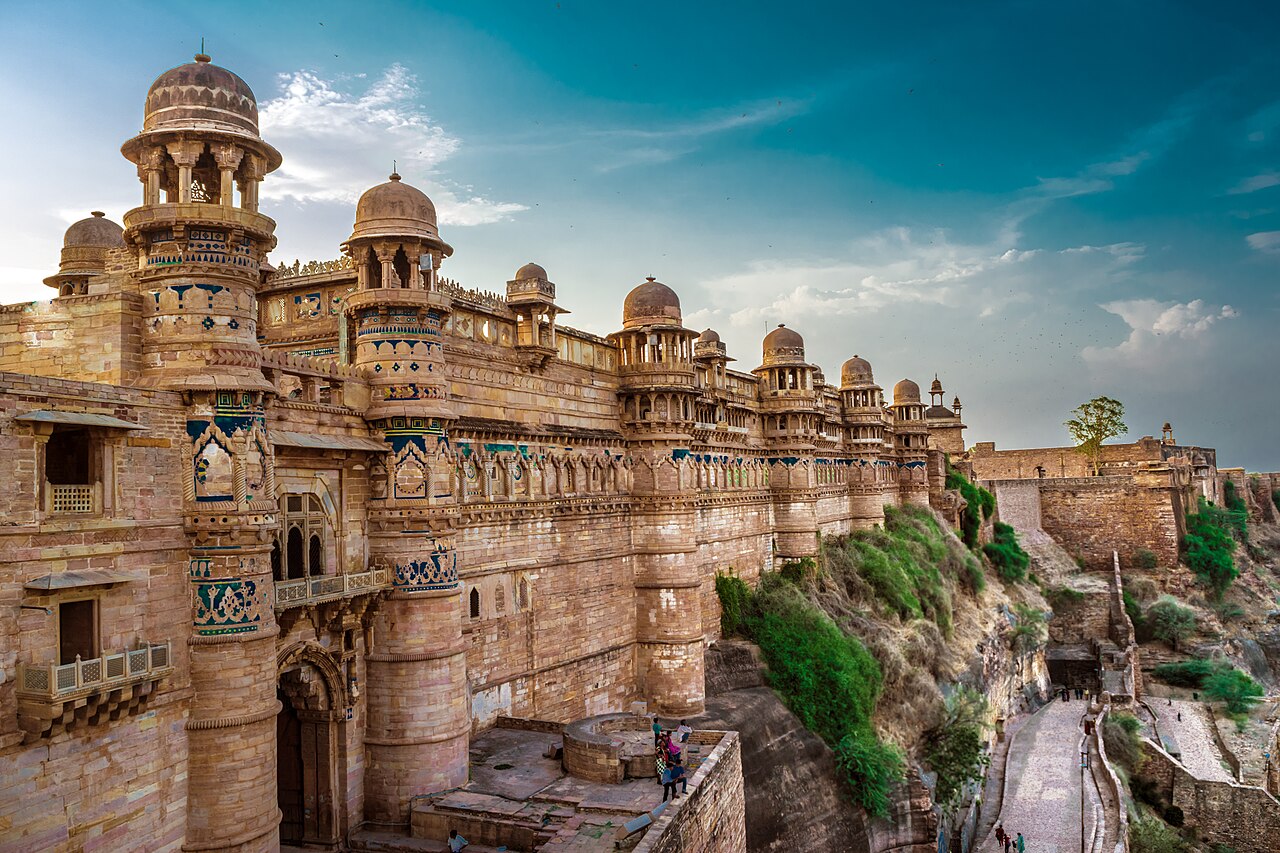
Overview
Gwalior Fort, located in the city of Gwalior, Madhya Pradesh, India, is one of the largest and most impressive forts in the country. Perched on a hilltop, this fort is renowned for its stunning architecture and rich history that dates back to the 8th century. The fort complex encompasses several palaces, temples, and historical monuments, making it a significant site for both tourists and historians alike. Its strategic location has made it a crucial military stronghold throughout various dynasties, including the Tomars, Mughals, and Marathas.
Why Visit
- Architectural Marvel: The fort showcases a blend of Indo-Islamic architecture, with intricate carvings and beautiful murals, especially notable in the Man Singh Palace.
- Historical Significance: The site has witnessed many historical events and is linked to the legendary poet Tansen, one of the nine jewels of Emperor Akbar's court.
- Scenic Views: The elevated position offers panoramic views of the surrounding landscape, allowing visitors to appreciate the natural beauty of Gwalior.
- Cultural Heritage: The fort is home to several temples, including the Saas Bahu Ka Mandir, which is dedicated to the worship of Hindu deities.
- Light and Sound Show: An engaging light and sound show narrates the history of Gwalior Fort, enhancing the visitor experience during the evenings.
Visitor Experience
Exploring Gwalior Fort is a journey through time, where visitors can walk along its massive walls, which are nearly 35 kilometers long. The fort's architecture includes several notable structures, such as the Gujari Mahal, which is a beautiful palace built for Queen Mrignayani, and the impressive Jain sculptures carved into the rock face that date back to the 15th century. As guests traverse the fort's pathways, they encounter a variety of historical artifacts and inscriptions that tell the story of its past rulers. The fort also has several viewpoints that provide stunning vistas of the city below, particularly at sunset. The atmosphere is often enriched by the sounds of local musicians, adding a cultural layer to the experience.
Travel Tips
When planning a visit to Gwalior Fort, it is advisable to wear comfortable footwear, as exploring the extensive fort requires considerable walking. Early morning or late afternoon visits are recommended to avoid the heat and to enjoy the fort in softer light. It's also beneficial to carry water and snacks, as amenities within the fort can be limited. Engaging a local guide can enhance the experience by providing deeper insights into the fort's history and architecture. Additionally, considering the fort's elevated location, visitors should be prepared for varying weather conditions, especially during the monsoon season.
Nearby Places
In addition to the fort itself, visitors can explore the nearby Jai Vilas Palace, an opulent residence of the Scindia family that showcases a rich collection of artifacts. The Tomb of Tansen is another significant site, honoring the great musician and providing insight into the cultural history of the region. The Gwalior Zoo and the sprawling Phool Bagh park offer relaxation and natural beauty in proximity to the historical sites. The city of Gwalior is also known for its vibrant local markets, where traditional handicrafts and textiles can be found.
See also
Places around this location