Overview
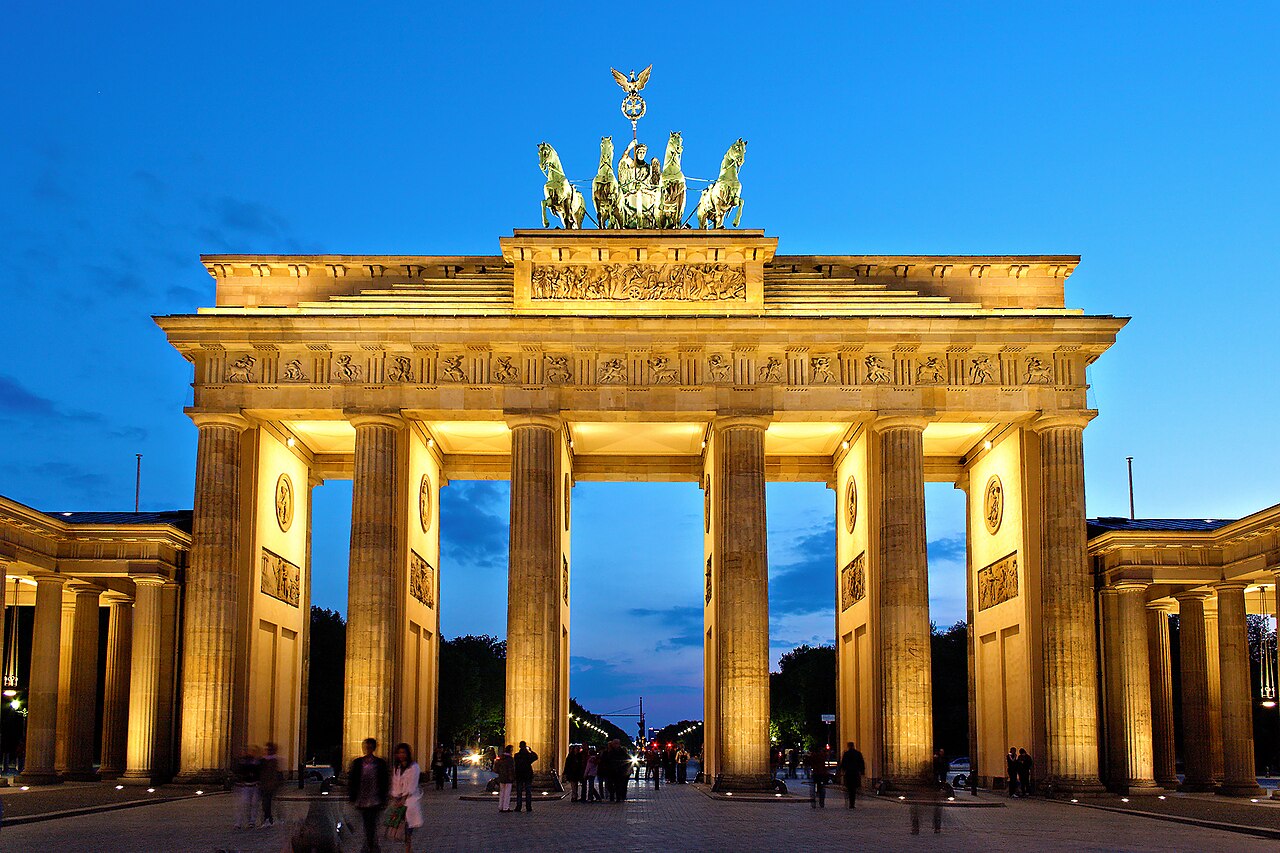
The Brandenburg Gate is a neoclassical monument located in Berlin, Germany, at coordinates 52.51628346, 13.37768512. Erected between 1788 and 1791, it was designed by architect Carl Gotthard Langhans and commissioned by King Frederick William II of Prussia. Initially serving as a city gate, it has evolved over the years into a symbol of German unity and peace, embodying the turbulent history of Berlin and the nation.
Why Visit
- The architectural design features 12 Doric columns, creating a grand entrance that reflects the influence of ancient Greek architecture.
- Atop the gate sits the Quadriga, a chariot drawn by four horses, which represents victory and peace, initially symbolizing the goddess of peace.
- It has witnessed significant historical events, including Napoleon's triumphal entry into Berlin and the fall of the Berlin Wall in 1989, marking critical moments in German history.
- The gate is part of the larger Pariser Platz, offering a scenic view and access to various cultural institutions and historical buildings.
- It is illuminated beautifully at night, providing a stunning backdrop for photographs and evening strolls.
Visitor Experience
Visitors to the Brandenburg Gate can appreciate its historical significance and architectural beauty from multiple vantage points. The site is often bustling with tourists and locals alike, creating a vibrant atmosphere. The surrounding area includes spacious sidewalks, making it an ideal spot for leisurely walks or photography. Various tours are available that explain the gate's history, and many visitors take the opportunity to explore nearby attractions such as the Reichstag Building and the Memorial to the Murdered Jews of Europe. The gate also serves as a venue for public events and celebrations, further enhancing its role in contemporary culture.
Travel Tips
When visiting the Brandenburg Gate, consider arriving early in the morning or later in the evening to avoid peak tourist crowds. Bringing a camera is essential to capture both the gate's grandeur and the surrounding architectural landscape. Be mindful of the weather, as rain can affect visibility and enjoyment. If possible, combine your visit with a walk through Tiergarten, a nearby park that offers a peaceful respite from the urban environment. Lastly, take time to read the informative plaques around the area to gain a deeper understanding of the gate's historical context.
Nearby Places
Adjacent to the Brandenburg Gate is the Reichstag Building, home of the German Parliament, known for its iconic glass dome. A short walk away, visitors can find the Memorial to the Murdered Jews of Europe, a poignant tribute to Holocaust victims. The Unter den Linden boulevard, lined with linden trees, stretches from the gate to the Berlin Cathedral, offering a scenic route filled with shops, cafes, and historical landmarks. The nearby Potsdamer Platz is also a hub of modern architecture and entertainment, showcasing the contrast between Berlin's rich history and its contemporary development.
See also
Places around this location