Overview
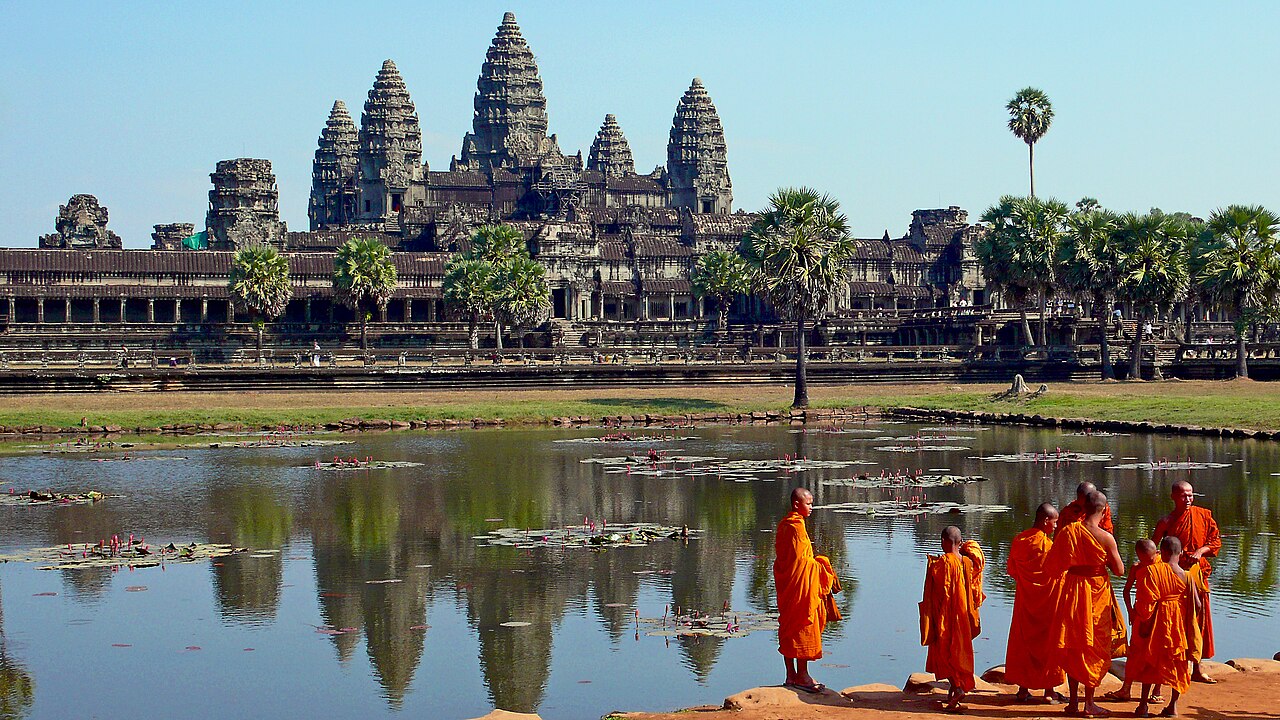
Angkor Wat, located in Cambodia at coordinates 13.41259284, 103.8668664, is one of the largest and best-preserved temple complexes in the world. Originally constructed in the early 12th century as a Hindu temple dedicated to the god Vishnu, it later transitioned into a Buddhist temple, reflecting the region's shifting religious practices. The intricate architecture combines elements of Khmer and classical design, characterized by its grand scale, extensive bas-reliefs, and a central tower symbolizing Mount Meru, the center of the universe in Hindu cosmology.
Why Visit
- Explore the remarkable architecture featuring five towers that represent the peaks of Mount Meru.
- Admire the extensive bas-reliefs that depict various scenes from Hindu mythology, including the famous Churning of the Ocean of Milk.
- Experience the serene atmosphere at sunrise or sunset when the temple is bathed in golden light.
- Learn about the historical significance of Angkor Wat as a symbol of Cambodia’s cultural heritage and national pride.
Visitor Experience
Visitors to Angkor Wat often begin their journey at the west entrance, where the temple's impressive moat and pathway lead to the main structure. The vast complex covers over 162 hectares, allowing for an immersive exploration of its various galleries, libraries, and courtyards. Walking through the temple, guests can engage with the artistry of intricate carvings and stone sculptures. The atmosphere is enriched by the sound of birds and the rustle of trees, providing a tranquil backdrop to the historical narrative that unfolds within the walls. Many choose to participate in guided tours to gain deeper insights into the temple's history and architectural significance.
Travel Tips
When visiting Angkor Wat, it is advisable to wear comfortable footwear as the terrain can be uneven. Early morning visits can help avoid crowds and provide an opportunity to witness the spectacular sunrise over the temple. Carrying water and sun protection is recommended due to the tropical climate. Respectful attire is encouraged, especially when exploring sacred areas, so visitors should cover their shoulders and knees. Additionally, consider hiring a local guide for a more enriching experience, as they can provide valuable context about the temple's history and significance.
Nearby Places
The area surrounding Angkor Wat is rich in historical sites, including Angkor Thom, the last capital of the Khmer Empire, featuring the iconic Bayon Temple. Ta Prohm, another nearby temple, is famous for its intertwining trees and is often associated with the film "Tomb Raider." Visitors can also explore the Angkor National Museum, which offers comprehensive insights into the history and culture of the Khmer Empire. The lush jungle surrounding these sites provides an opportunity for nature walks and exploration of diverse flora and fauna.
See also
Places around this location